
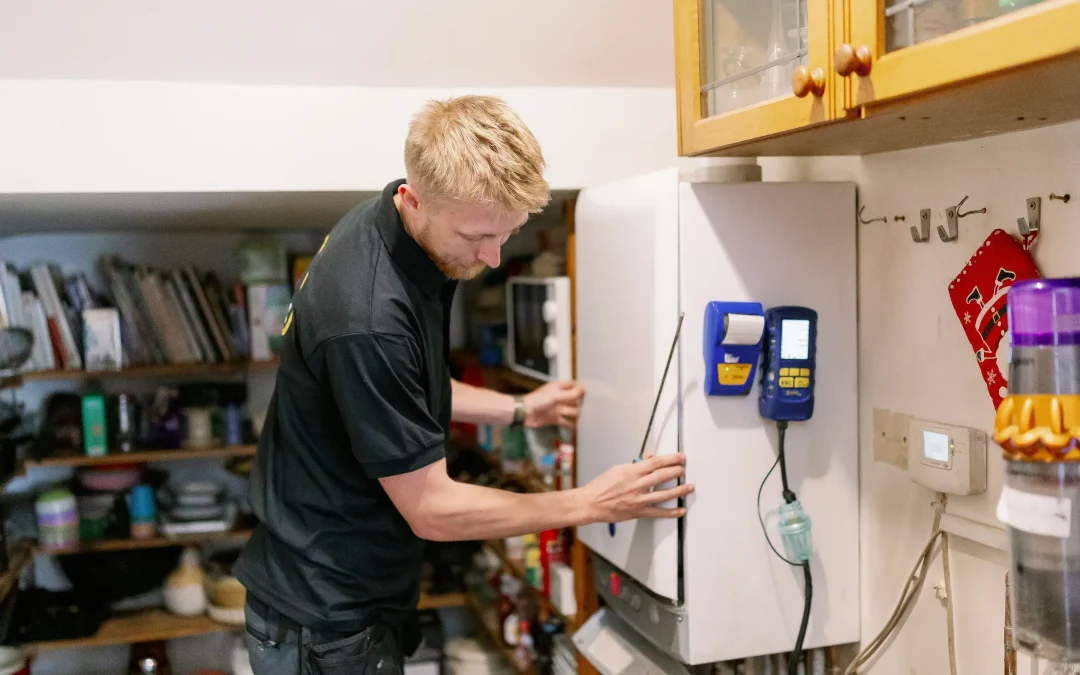
The best way to prepare your boiler for winter is to test your heating early, check the pressure and radiators, protect the condensate pipe and book a boiler service before the cold sets in. After months of lighter use, heating systems can develop faults that only show up when you need them most.
As a family-run plumbing and heating company based in Great Baddow, we see the same pattern every year. The first cold snap arrives, everyone turns their heating up, and the calls start coming in. Many of those problems could have been spotted weeks earlier. Here are the checks you can safely do yourself, and the jobs that should always be left to a Gas Safe registered engineer.
Test your heating before you need it
The simplest check is also the most useful. Turn your heating on for an hour or so in early autumn, before temperatures really drop, and check that:
- Your boiler fires up normally
- Every radiator heats up
- There are no unusual noises, such as banging, gurgling or whistling
- The heating switches off once the room reaches the temperature you’ve set
- There are no drips or damp patches around the boiler or pipework
Finding a fault on a mild October afternoon is far less stressful than discovering it on the first frosty morning, when engineers’ diaries are at their fullest.
Check your radiators for cold spots
If a radiator is cold at the top but warm at the bottom, air is probably trapped inside it, and it needs bleeding. This is a routine job most homeowners can do with a radiator key.
Turn the heating off and let the radiators cool. Hold a cloth under the bleed valve at the top corner, then turn the key slowly anticlockwise until you hear a hiss. Close it again as soon as water starts to appear.
Bleeding radiators can lower the pressure in your system, so check the boiler pressure afterwards. If a radiator is cold at the bottom instead, or stays cold after bleeding, it may have a build-up of sludge, which needs a professional to look at.
Check your boiler pressure
Most combi and system boilers have a pressure gauge or digital display on the front. Many sit at around 1 to 1.5 bar when the heating is cold, but the right figure varies between models, so check your manual. If you have an older heat-only boiler with a feed tank in the loft, your system may not have a pressure gauge at all.
If the pressure keeps dropping after you’ve topped it up, don’t keep repressurising it. Repeated pressure loss usually points to a leak somewhere in the system or a faulty component, and it needs to be properly diagnosed.
Look over visible pipework
Take a quick look at any pipework you can see around the boiler, in the airing cupboard and under the sinks. Look out for:
- Damp patches or drips
- Green or white crusting around joints
- Rust or corrosion
- Missing or damaged pipe insulation
Pipes in lofts, garages and on outside walls are the most likely to freeze, so it’s worth lagging anything exposed. Our cold-weather plumbing tips cover older Essex homes in more detail.
Don’t remove the boiler casing to look inside. If you spot a leak, get it checked by a professional rather than trying to fix it yourself.
Protect your condensate pipe
Condensing boilers, which include almost every gas boiler fitted in England since 2005, produce waste water that drains away through a plastic condensate pipe. Where that pipe runs outside, it can freeze in very cold weather. When it does, the boiler usually shuts down and shows a fault code.
Before winter, check the outside section of the pipe isn’t cracked, blocked or sagging, and consider insulating it. If it does freeze, manufacturers such as Baxi advise thawing it with warm water, a hot water bottle or a heat pack, never boiling water. Then reset the boiler using the instructions in your manual. If it still won’t restart, call an engineer.
Check your thermostat and heating controls
Turn your thermostat up and down and make sure the boiler responds. If you have a programmer or timer, check the clock is right, and your schedules still suit your routine, especially after the clocks go back. If you use a smart thermostat, make sure it’s still talking to the boiler through its app.
A faulty thermostat can make it look as though the boiler has broken down when the controls are the real problem, so it’s worth ruling them out first.
Know the warning signs that need an engineer
Some problems are more than a winter inconvenience. If you smell gas, turn off the supply at the meter if it’s safe to do so, open the doors and windows, and don’t use electrical switches or naked flames. Leave the property and call the National Gas Emergency Service on 0800 111 999.
Carbon monoxide has no smell, so you won’t know it’s there without an alarm. Signs of a faulty appliance include a yellow or orange flame instead of a crisp blue one, black marks on or around the appliance, and excess condensation in the room. Symptoms of carbon monoxide poisoning include headaches, dizziness, nausea and breathlessness, which are easy to mistake for a winter bug.
Fit an audible carbon monoxide alarm in any room with a gas boiler or other fuel-burning appliance, and test it when you check your heating. Cadent’s gas safety advice explains what to do if you’re worried.
Book a professional boiler service
Homeowner checks are useful, but they can’t replace a professional boiler service. During a service, a Gas Safe registered engineer checks that the boiler is burning gas safely and efficiently, tests its safety devices, makes sure the flue is clear and cleans components such as the condensate trap.
Most boiler manufacturers recommend an annual service, and many make it a condition of the warranty. Booking in early autumn means your boiler is checked before it starts working its hardest, and you avoid the winter rush.
By law, anyone working on a gas appliance must be on the Gas Safe Register. You can check an engineer on the Gas Safe Register website or ask to see their ID card. If you need a boiler service in Chelmsford, our Gas Safe registered engineers can check your boiler over before winter.
What boiler checks can you do yourself?
You can safely test your heating, bleed radiators, check the boiler pressure, look for visible leaks, check your thermostat and protect an outdoor condensate pipe. Anything that involves removing the boiler casing or touching gas components, the flue or the gas supply must be done by a Gas Safe registered engineer.
Call a professional if you notice pressure that keeps dropping, leaks, repeated fault codes, unusual noises or a boiler that keeps cutting out.
Get your heating ready before the cold sets in
Most winter boiler breakdowns don’t come out of nowhere. A dripping joint, a pressure gauge that keeps falling or a radiator that never quite warms up are often the first signs. A few simple checks now, followed by a professional service, will put you in a much better position when the temperature drops.
Need help getting your heating ready for winter? Call LKG Daughters on 01245 478 111 or use our contact form to book a boiler service or talk through a problem. If your heating fails completely, our 24-hour emergency callout is there when you need it.